Hand-Brushed Cedar Trim Stain on an Early 1900s Farmhouse

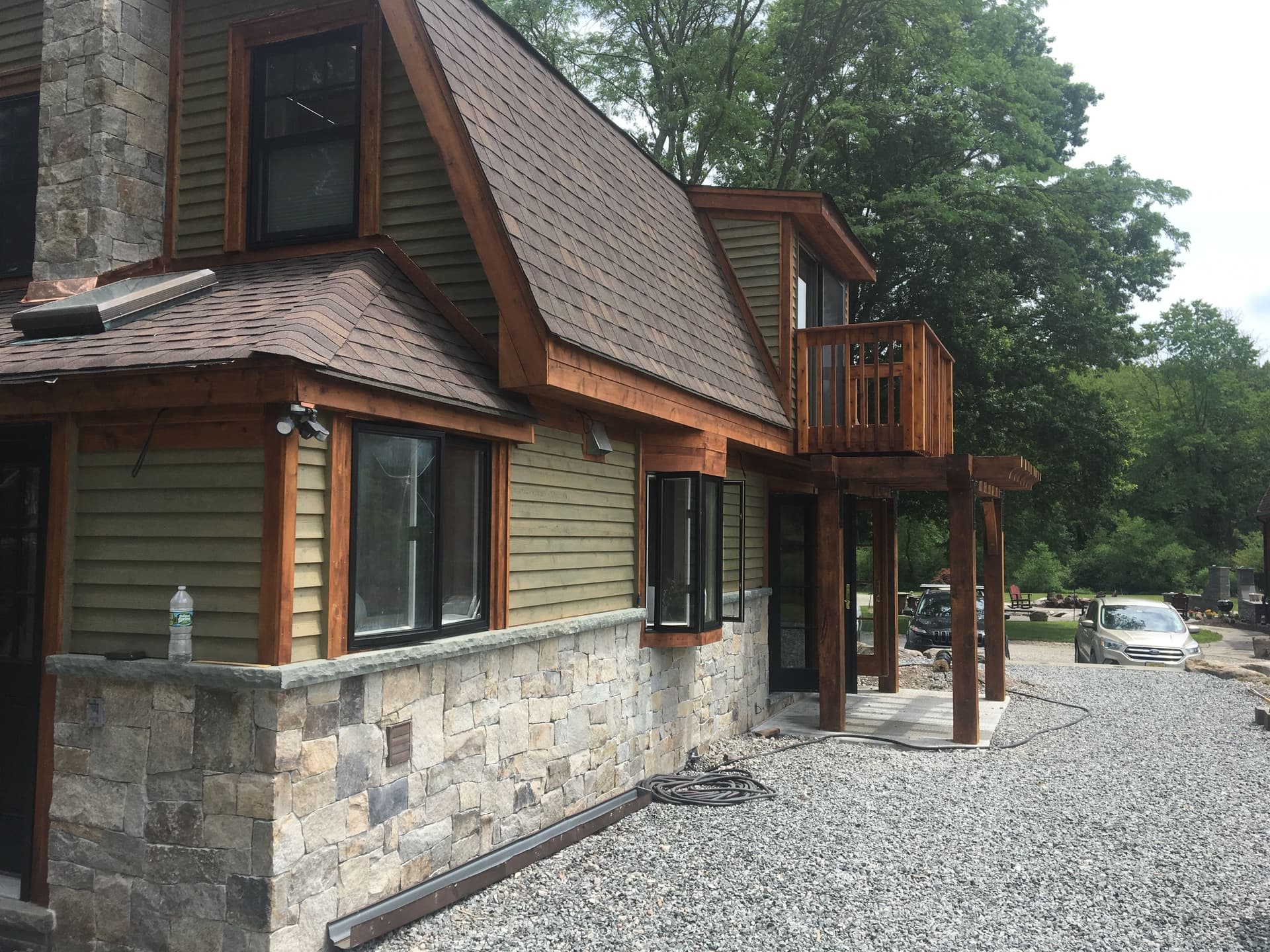
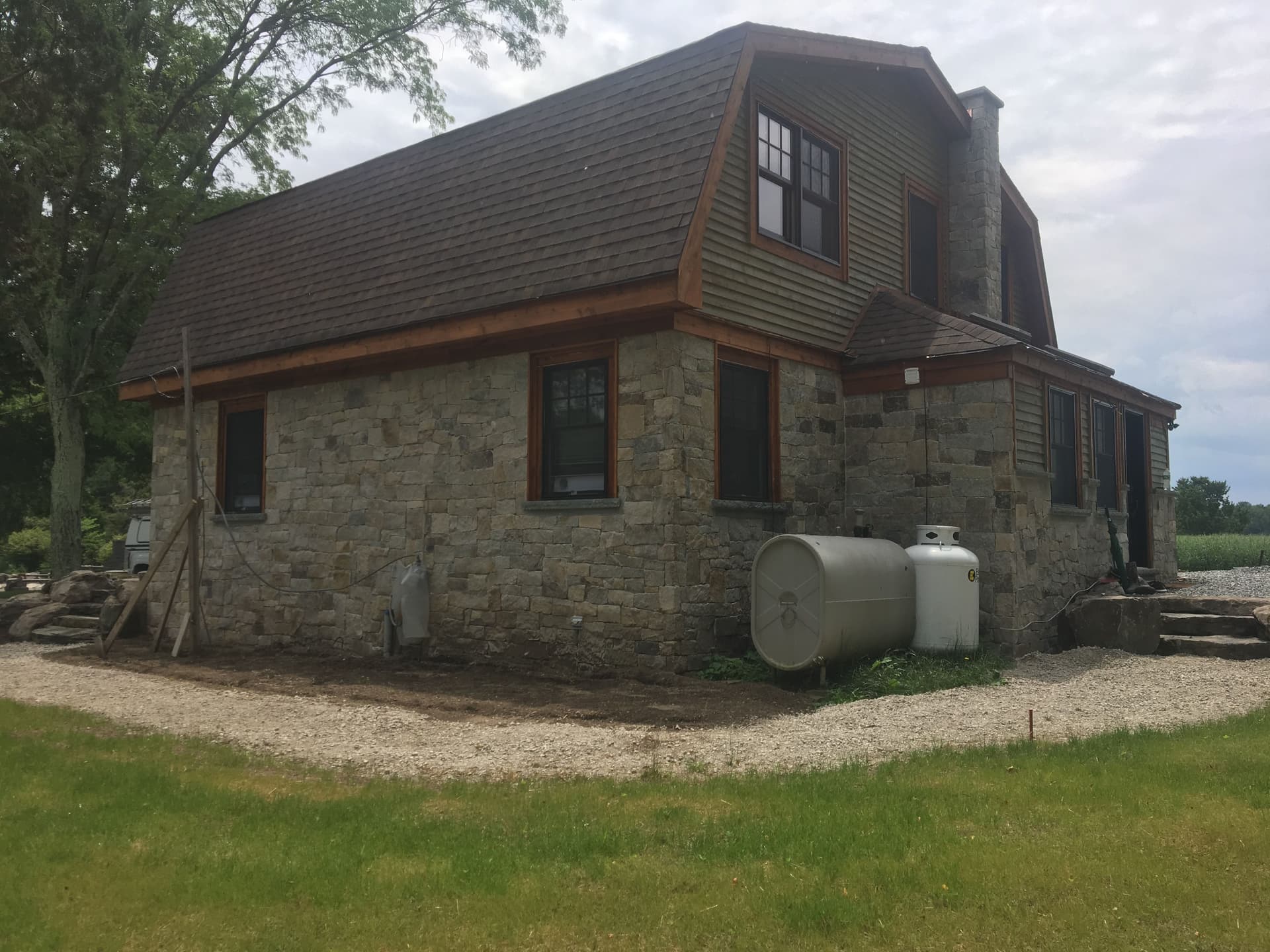
There's a certain kind of job that requires more than just showing up with a sprayer and calling it done. Old farmhouses like this one have real character - stone foundation, cedar trim, a gambrel roofline - and the finish work has to match that. Cutting corners here would stick out immediately.
For the cedar trim on this early 1900s farmhouse, we went with Benjamin Moore oil-based stain applied by hand brush. No shortcuts. Oil-based stain penetrates the wood grain rather than sitting on top of it, which means it bonds better, holds up longer, and doesn't peel the way film-forming finishes can. On new cedar especially, getting that penetration right from the first application makes a real difference down the road.
The color scheme was just as deliberate. We landed on a two-tone approach - the warm, rich cedar stain against the sage green siding and natural stone foundation. Each element plays off the others. Nothing fights for attention. The goal was for the whole exterior to feel cohesive, like it all belonged together from the start.
Hand brushing is slower than spraying. That's the point. You're working the product into the wood, not just coating the surface. On trim pieces, window surrounds, structural posts, and the upper deck framing, that kind of control matters. You can see the coverage, feel where the wood needs more, and catch any spots before they become problems later.
Exterior painting on a home like this isn't just about looks - it's about protecting the wood for the long haul. Cedar is durable, but left unfinished or done poorly, it weathers fast. A proper oil-based stain application done right the first time is what keeps the trim looking good for years, not just seasons.